Glass Art Museum Egypt: 3D Turntables & Fragile Heritage
Preserving the luminescence, refractive caustics, and chemical fragility of 4,200 historical Islamic Mamluk enameled lamps and contemporary studio glass works.
Executive Summary
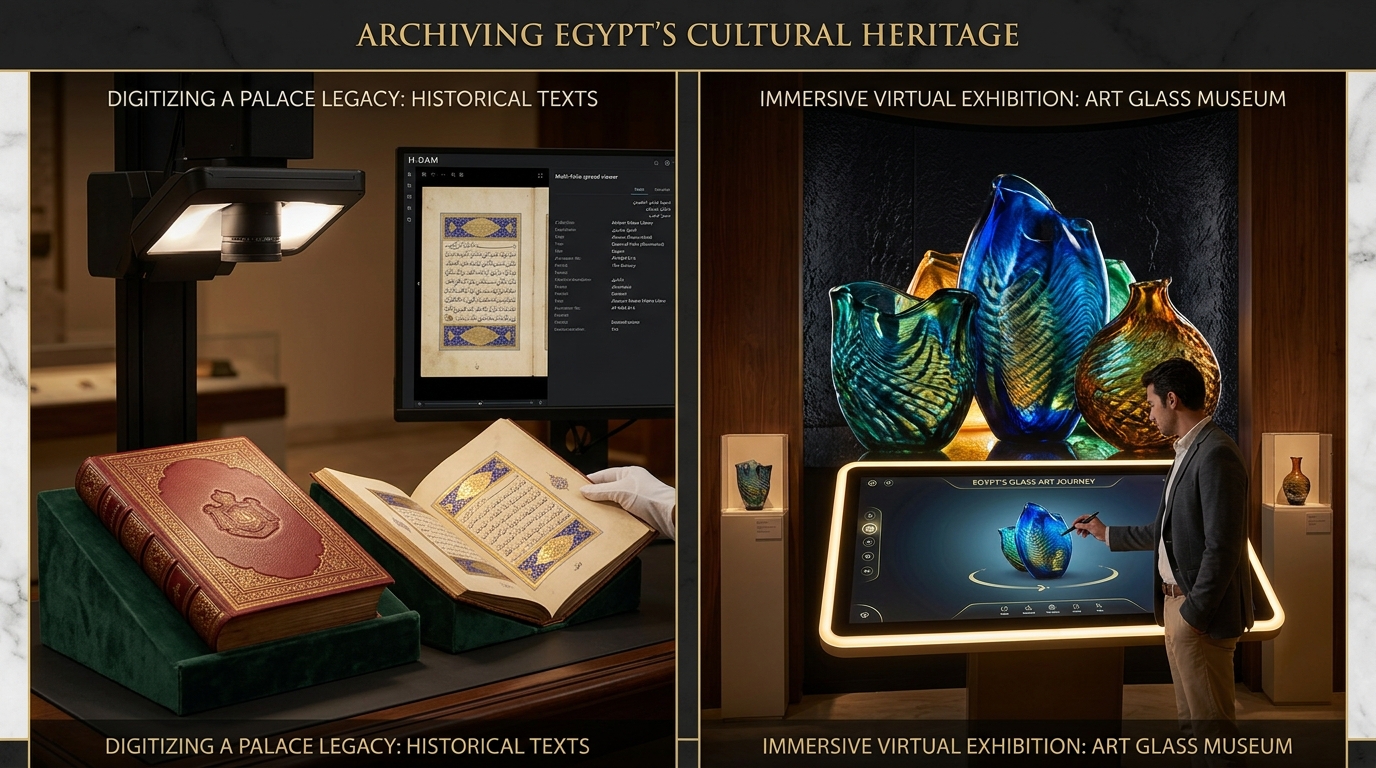
The Glass Art Museum in Egypt safeguards historical core-formed Pharaoh vessels, 14th-century Mamluk mosque lamps, and monumental contemporary kiln-cast glass sculptures. Due to extreme fragility and complex optical properties, conventional 2D photography cannot capture internal bubbles, color gradations, or chemical decay risks like glass crizzling.
The Operational Challenge
Antique glass exhibits severe chemical instability (glass weeping/crizzling) when humidity strays outside 40–45% RH. Furthermore, flat photographs cannot capture the refractive brilliance and translucent depths of blown glass, leading to inadequate scholar documentation.
The Hawas Cloud Solution
Implemented a specialized glass archetype in H-MCMS tracking refractive indices, annealing schedules, and crizzling susceptibility. Captured every fragile vessel on a 72-frame automated turntable rig in H-DAM, compiling interactive 360° caustic spin viewers. Connected vitrines to LoRaWAN micro-climate sensors triggering automated conservator alerts.
Verified Quantitative Results
4,200 glass masterworks documented in 360° spin; zero crizzling incidents reported over 24 months due to automated IoT humidity alerts; 82% reduction in physical artifact handling for scholar research.
Sensors, NFC Tags & Archival Encoders
Synchronized 72-step motorized optical turntable rig with diffuse polarizers; Zigbee/LoRaWAN micro-hygrometers logging relative humidity every 15 minutes; concealed vitrine vibration sensors.
Archival Hierarchy & Custom JSON Schema
Experience This Blueprint's Engine Live
Interact with the <50ms NFC vitrine simulator: tap any display case to stream instant archival stories and inspect 3D WebXR models.
H-TMS: <50ms Vitrine NFC & H-AR-View Holographic Simulator
NTAG424 DNAExperience physical vitrine tap-to-engage without app download, unlocking 3D holographic layers, 4K docs, and Spark AR
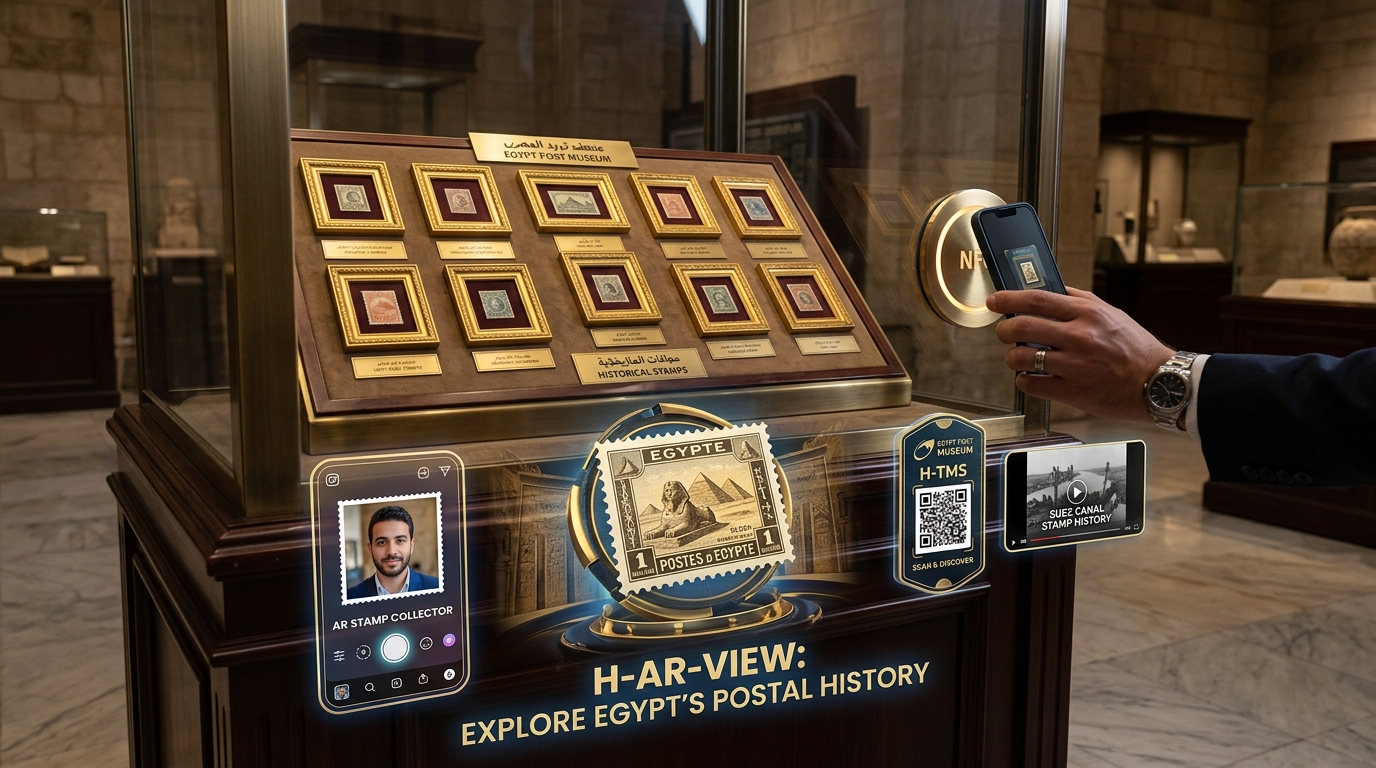
1866 Sphinx & Pyramids First Issue / 1926 King Fuad Commemorative
Museum-grade physical exhibit integration enabling instant high-precision archival insights, provenance certificates, and restoration scans straight via browser WebXR.
Engineered 3D tactile relief plate reproducing stamp perforations and central Sphinx engraving at 1.4mm relief, paired with synchronized Audio TTS & Braille.